

In 2007, we were the first major tea company to commit to sustainable sourcing of tea on a large scale. We are on track to achieve our 2015 milestone and 2020 target.
We are sourcing our tea from Rainforest Alliance Certified™ farms or from farms verified against our Sustainable Agriculture Code. Rainforest Alliance is an international environmental organisation. We decided that their certification scheme was the most appropriate because of its comprehensive approach towards sustainable farm management, covering social, economic and environmental aspects. This is in line with the way we have been managing our own Sustainable Agriculture Programme for over a decade.
Leading the industry
As the first major tea company to source tea sustainably on a large scale, we have worked hard to engage farmers and build relationships with producers.
Our efforts have been a catalyst to the industry and other tea companies have followed our lead. The tea industry as a whole is now moving to sustainable farming practices.
The journey began at our own tea estates in Kenya and Tanzania. These were the first to achieve Rainforest Alliance certification in 2007 and 2008 respectively.
Scaling up
Our success is dependent on changing farming practices among our tea producers. As well as buying from large estates, we also source tea from many hundreds of thousands of smallholder farmers around the world.
As the largest private buyer of Kenyan smallholder tea, Lipton set up a public–private partnership project in 2006 with the Kenya Tea Development Agency (KTDA) and other partners to train smallholder farmers in sustainable tea cultivation.
Building on this work, Unilever is partnering with the Sustainable Trade Initiative (IDH) Tea Improvement Project to address bottlenecks in tea production that prevent tea smallholders from implementing sustainable practices. Further partners include Rainforest Alliance, Oxfam and other companies. The project runs from 2010 to 2013, covering a number of countries including Kenya, Rwanda, Indonesia and Sri Lanka.
As part of our plan to source tea sustainably, for the last six years we have worked with the Kenya Tea Development Agency to educate its smallholder farmers about sustainable cultivation and Rainforest Alliance certification. Thanks to these efforts, many certified tea farmers are now achieving higher yields. Between 2007 and the end of 2012, a total of around 450,000 farmers had been trained to the Rainforest Alliance standard, in partnership with Unilever, in preparation for certification.
Unilever and the Sustainable Trade Initiative (IDH) have jointly agreed to invest a further €4 million over the next two years to help take our sustainability initiatives to scale in Africa, Vietnam and India. This training will benefit not only Unilever but also the tea industry as a whole.
To achieve certification, farmers must adopt sustainable practices and invest in a range of improvements, including protective suits for workers dealing with agrochemicals, wastewater treatment equipment and micro hydroelectric schemes.
These improvements can bring benefits to the farmers such as increased yields and improved crop quality.
Our involvement ranges from providing introductory training to helping smallholders achieve certification through guidance and practical advice. In this way we are supporting the Millennium Development Goals for poverty reduction and a sustainable environment.
See Helping smallholder farmers for more information.
Training tea smallholders in sustainable cultivation
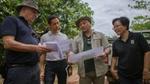
Smallholder farmers are playing an increasingly important role in tea production. Yet many lack knowledge about socially and environmentally responsible farming practices. In Kenya and Turkey, Unilever runs farmer field schools to train small producers in sustainable cultivation techniques. In 2012 alone, over 10,000 farmers in Turkey successfully completed Rainforest Alliance’s (RA) certification process.
As well as protecting native forests and reducing negative environmental impacts, encouraging the uptake of sustainable farming methods is cutting costs from our supply chain. Smallholders are also reaping rewards. A recent impact assessment in Kenya, for example, shows that certified farmers are achieving higher yields with lower inputs than their non-certified peers. Their accident rates and incomes also compare favourably.
We plan to use our experience in Kenya and Turkey to develop a sustainable tea programme for the domestic market in India. We are also considering applying the same approach to other crops, such as vanilla.
Tea 2030: collaborating for a long-term future
Climate change, water scarcity, competition for land and rapidly changing consumer markets are just some of the challenges facing the tea industry in the years ahead. In Indonesia, for example, where we source large quantities of tea, 13,000 hectares of tea plantations were uprooted between 2005 and 2010 to make room for palm oil, fruit and other crops. Tackling challenges such as these requires a co-ordinated response. Unilever is therefore working with others in the tea value chain to ensure the industry’s long-term viability.
Tea 2030 is a new project for tackling these issues. Others joining us in this initiative include Yorkshire Tea, the Ethical Tea Partnership and Rainforest Alliance. By September 2013, we hope to have an initial set of agreed parameters within which we can collaboratively develop innovative long-term solutions.